THE LINEAGE OF THE FIRE: Campfire Starters & Charnel Ground Sitters
We do not look to the past for permission, but to recognise the mechanics of the fire. These figures are not polished gurus or bureaucrats; they are the vagabonds, yogis, and outlaws who sat in the Charnel Ground and left behind sparks for anyone brave enough to catch them.
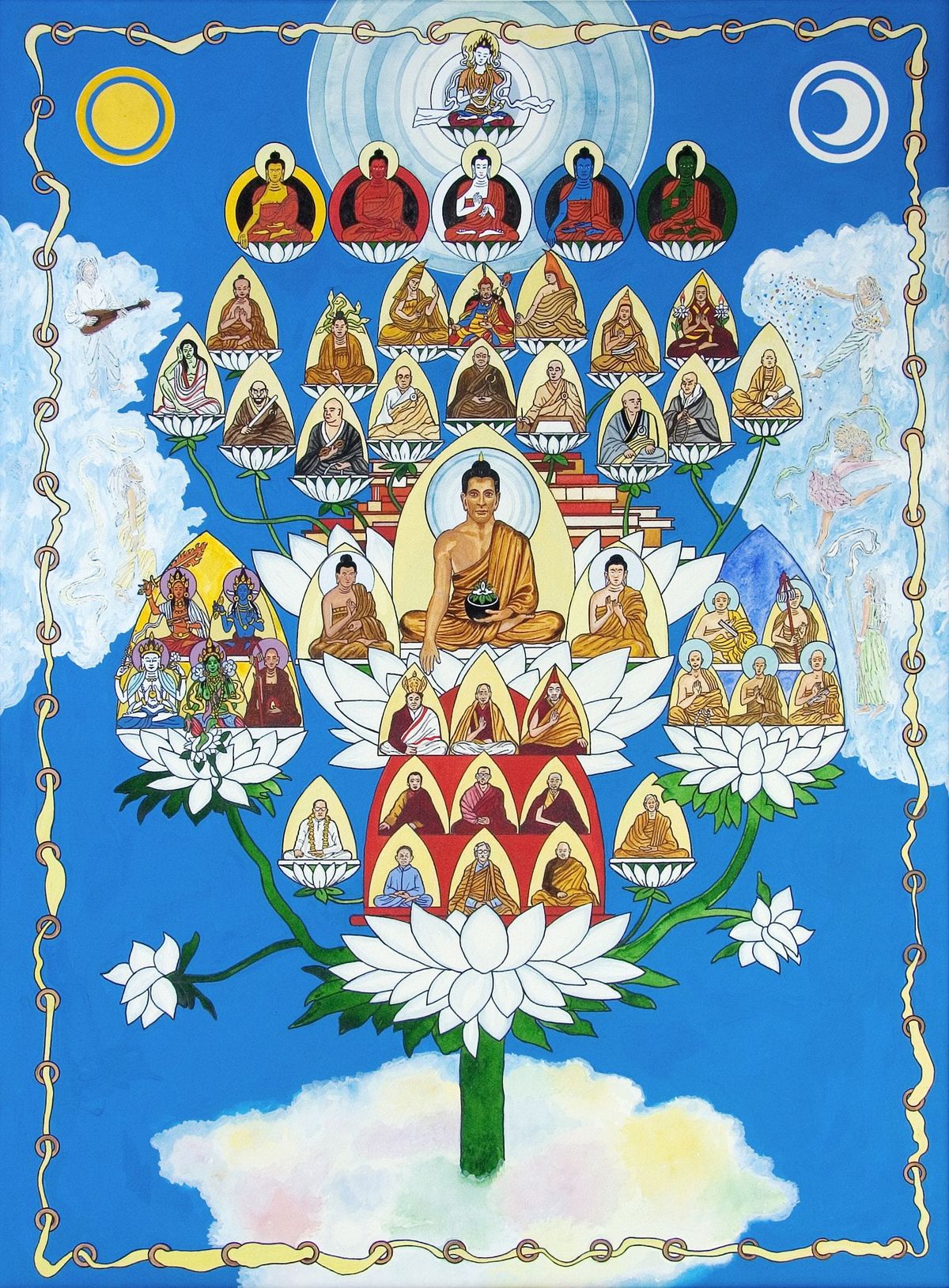
We do not look to the past for permission. We look to the past to recognize the mechanics of the fire.
The figures on this timeline are not institutional bureaucrats or polished gurus; they are the Vagabonds, Yogis, and Outlaws who refused the anesthetics of their eras. They sat in the Charnel Ground, faced the bone-crushing reality of existence, and left behind sparks for anyone brave enough to catch them.
Buddha Shakyamuni (c. 563–483 BC)
- Essence: The Original Sovereign / The First Outlaw.
- Practice Focus: Direct somatic realization and the Earth Witness (Bhumisparsha). He explicitly rejected both the soft trance of extreme wealth (the palace) and the "Starving Monk" trap of extreme self-denial. He mapped the exact mechanics of human friction—the endless, exhausting oscillation of craving and aversion—and proved that the only way off the mechanical treadmill of Samsara is to drop the heavy armor, stop fighting the raw data, and touch the dirt of World 12.
- The Work: He did not establish a religion or demand blind worship; he delivered a precise, unarguable diagnostic for the human condition. He walked away from the ultimate World 48 inheritance (a kingdom and absolute power) to sit directly in the Charnel Ground. For 45 years, he operated as the ultimate Campfire Host, radiating unconditioned warmth and leaving behind the definitive survival manual for anyone freezing in the dark.
Buddhaghosa (5th Century)
- Essence: The Mapmaker of the Mind.
- Practice Focus: Systematizing the visceral, psychological reality of the path.
- The Work: He did not invent the Dharma; he built the definitive diagnostic manual. He anchored scattered teachings into a precise, heavy instrument for navigating the mechanical friction of the mind and the body.
Huineng (638–713)
- Essence: The Illiterate Woodcutter.
- Practice Focus: Direct, unmediated realization; bypassing intellectual complication.
- The Work: He shattered the academic elite's grip on the Zen tradition. He proved that the fire of awakening is not found in libraries or monastic hierarchy, but in the raw dirt of World 12—chopping wood and pounding rice.
Padmasambhava (8th Century)
- Essence: The Tantric Outlaw.
- Practice Focus: Subjugating the "demons" of the psyche—transmuting the poisons of the Grey World directly into fuel for the fire.
- The Work: He brought the fierce, unmediated heat of Vajrayana to Tibet. Operating entirely outside monastic safety, he wielded a radical presence to cut through the bureaucratic and spiritual illusions of his time.
Shantideva (8th Century)
- Essence: The Sleeping Monk.
- Practice Focus: The awakened heart (Bodhicitta) as the ultimate Sovereign action.
- The Work: Viewed by his peers as lazy and useless, he delivered his teachings as a massive conscious shock. He exposed the mechanical hijack of the "Pleaser" and the "Reformer," showing that true heroism is the internal battle against one's own automatic reactions.
Tilopa (988–1069)
- Essence: The Sesame Seed Pounder.
- Practice Focus: Mahamudra—the practice of radical, unedited presence in the Great Unfolding.
- The Work: He refused the robes and safety of the institution, choosing to live as a vagabond pounding sesame seeds and eating fish entrails. He proves that the hottest fire must be anchored in the lowest, grittiest physical reality.
Milarepa (c. 1052–1135)
- Essence: The Cotton-Clad Yogi.
- Practice Focus: Extreme physical constraint (the ultimate "No Fridge" protocol) and the transmutation of profound trauma into Vivid Aliveness.
- The Work: After a youth of violence, he retreated to the freezing caves of the Himalayas. He did not build schools; he sang spontaneous songs of realization—raw sparks from his campfire—directly to the freezing travelers who managed to find him.
Hakuin Ekaku (1686–1769)
- Essence: The Fierce Roar of Zen.
- Practice Focus: The Great Doubt and the Great Death, using koans as deliberate mental firewood.
- The Work: He revitalized a dead, institutionalized Zen tradition by bringing back bone-crushing somatic reality. He demanded visceral, sweaty practice over polite, room-temperature meditation.
Ryokan Taigu (1758–1831)
- Essence: The Great Fool.
- Practice Focus: Radical simplicity, folding time, and playing with children.
- The Work: He walked away from a prestigious temple position to live in a tiny, leaking hermitage. He dropped the exhausting "Project of Becoming" entirely. His life was the campfire; his unvarnished poetry was the dense hardwood he threw onto it.
Anagarika Dharmapala (1864–1933)
- Essence: The Homeless Wanderer.
- Practice Focus: Fierce action in the world without attachment to the Grey World's approval.
- The Work: A modern reformer who refused to let the Dharma become a museum piece. He was an uncompromising force who insisted that spiritual practice must be a living, breathing engine that engages with the raw dirt of social reality and stewardship.
Yogi Chen (1906–1987)
- Essence: The Hermit of Kalimpong.
- Practice Focus: Solitary, relentless charnel ground visualization and esoteric fire pujas.
- The Work: He lived entirely outside the monastic factory pipeline. He demonstrated that true practice does not need a congregation, an audience, or a begging bowl—only the heat of absolute discipline.
Dipa Ma (1911–1989)
- Essence: The Householder Yogi.
- Practice Focus: Radical concentration amidst the inescapable friction of the modern world.
- The Work: She proved that the "Charnel Ground" isn't just a literal graveyard; it is the grief of losing a family and the suffocating noise of a cramped city apartment. She mastered the deepest states of realization without ever leaving the messy, physical reality of World 12.
Jamyang Khyentse Chokyi Lodro (1893–1959)
- Essence: The Non-Sectarian Master.
- Practice Focus: Tearing down the walls between isolated lineages.
- The Work: He refused the "us vs. them" tribalism of the institution. He gathered the embers of all traditions to ensure the living fire survived the political collapse of his world.
Dilgo Khyentse Rinpoche (1910–1991)
- Essence: The Mountain of Maitri.
- Practice Focus: Holding the unconditioned, radiant space of vivid aliveness amidst chaos.
- The Work: After decades in solitary retreat, he emerged simply to pour that accumulated warmth onto anyone who sat near him. He was the ultimate Campfire Host—radiating Great Love without a trace of performance.
Dhardo Rinpoche (1917–1990)
- Essence: The Bodhisattva of the Orphanage.
- Practice Focus: Lived compassion. "Cherish the doctrine, live united, radiate love."
- The Work: He transmuted his high esoteric status into the gritty, daily reality of running a school for refugee children. He proved that true sovereignty grounds the teaching in dirty hands, logistics, and feeding the hungry.
Chatral (Chetul) Sangye Dorje (1913–2015)
- Essence: The Vagabond Yogi.
- Practice Focus: Radical non-compliance and the preservation of life.
- The Work: He kept moving specifically to avoid the Grey World "spiritual supermarket" and the trap of becoming a performing guru. He lived in a tent or small hermitage well into his 100s, proving that true Sovereignty is found in autonomy and dirt, not on a throne.